Before visiting Bulgaria, I had never heard of Belogradchik.
Like many travelers, I spent most of my time researching Sofia, Plovdiv, and Bulgaria’s more popular destinations. But after seeing photos of a fortress surrounded by towering red rock formations, I knew I had to add it to my itinerary.
Located about three hours from Sofia, Belogradchik Fortress and the Belogradchik Rocks turned out to be one of the highlights of my trip. The combination of dramatic scenery, fascinating history, and panoramic views makes it one of the best day trips from Sofia.
If you’re wondering whether Belogradchik is worth visiting, here’s everything you need to know before planning your trip.
Why Visit Belogradchik?
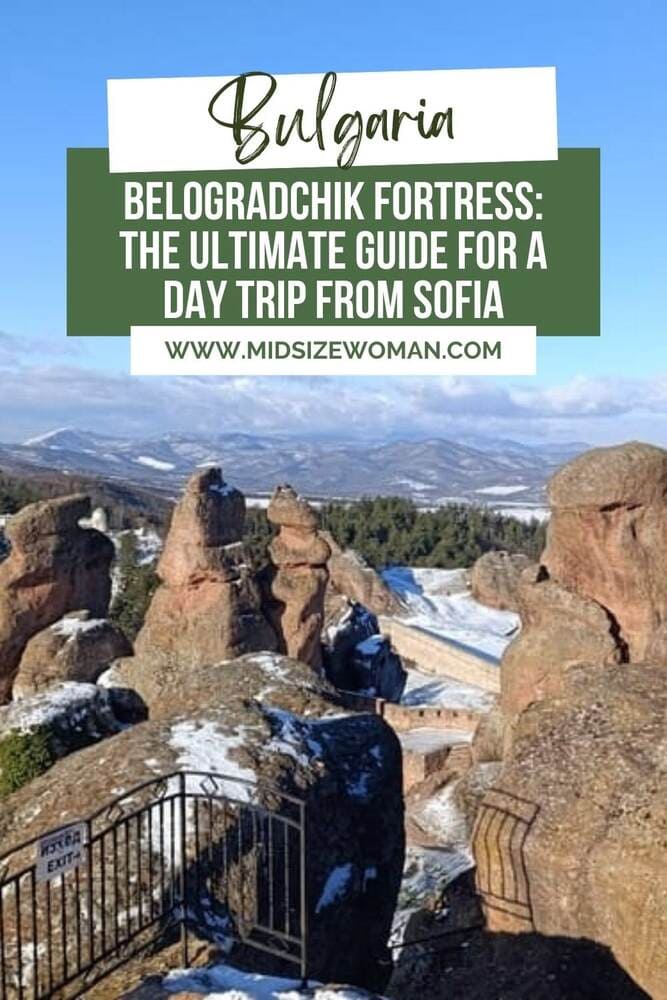
Belogradchik is one of Bulgaria’s most unique destinations, famous for its towering red rock formations and fortress built directly into the cliffs.
The Belogradchik Rocks stretch across northwestern Bulgaria and have been shaped by nature over millions of years into unusual formations that resemble people, animals, and towers. Combined with the historic fortress and sweeping views, they create one of the most impressive landscapes in the country.
Located around three hours from Sofia, Belogradchik is an easy day trip for travelers looking to experience a different side of Bulgaria.
Belogradchik at a Glance
If you’re planning a visit from Sofia, here’s a quick overview to help you decide how to fit it into your trip:
- Location: Northwestern Bulgaria
- Distance from Sofia: Around 180 km (112 miles)
- Travel time: About 3 hours by car
- Main highlights: Belogradchik Fortress + Belogradchik Rocks
- Best for: Day trips, photography, history, nature lovers
- Time needed: 2–4 hours on site
I found this stop easy to include in a road trip, but even as a day trip from Sofia, it’s very doable if you start early.
What surprised me most was how quickly the landscape changes once you get closer, the flat countryside slowly turns into dramatic rock formations rising in the distance, long before you actually reach the fortress.
How to Get to Belogradchik Fortress from Sofia
Getting to Belogradchik from Sofia is fairly straightforward, but it does take a bit of time, so it’s worth planning ahead.
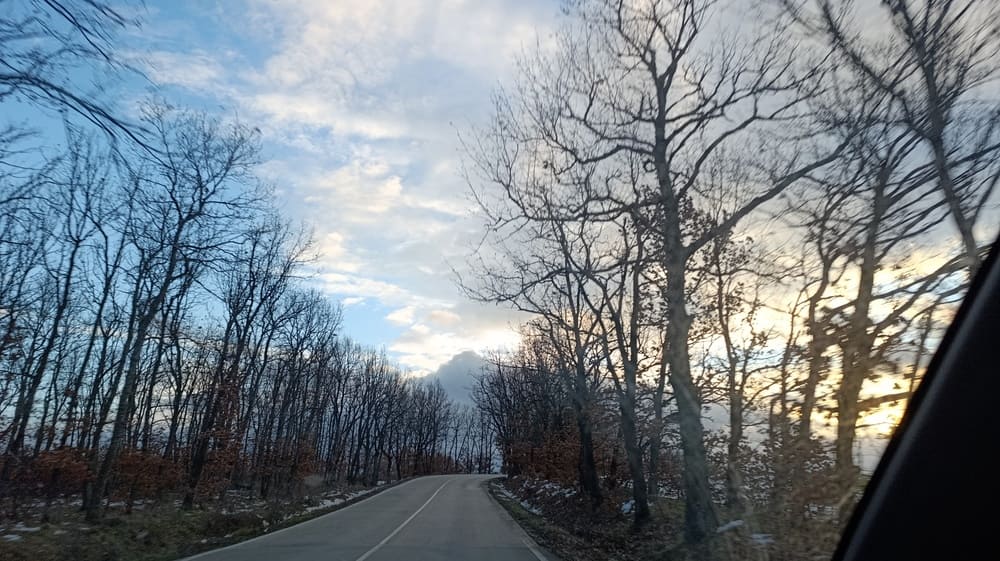
The route takes you through rural northwestern Bulgaria, passing small towns, farmland, and quiet roads that gradually get more scenic as you approach the Balkan Mountains. I actually enjoyed the drive more than I expected, it felt like a slow transition from city life into something much wilder and more remote.
1. By Car (Best Option)
This is the easiest and most flexible way to visit.
- Distance: ~180 km
- Driving time: Around 3 hours
- Route: Sofia → Vratsa → Belogradchik
Having a car means you can stop along the way and also explore nearby spots like viewpoints or small villages if you feel like it. For me, this was the option that made the most sense, especially if you want to combine Belogradchik with other stops nearby.
2. By Bus
There are buses from Sofia to Belogradchik, but they are less frequent and take longer.
- Longer travel time compared to driving
- Limited daily departures
- Requires checking schedules in advance
It works if you’re on a budget, but it’s not the most convenient option for a day trip.
3. By Guided Tour
Some tour companies in Sofia offer day trips to Belogradchik, usually combined with other attractions in the region. This is a good option if you don’t want to drive or plan logistics yourself, but you’ll have less flexibility with timing and stops.
My Take: If possible, I’d recommend renting a car. The freedom to move at your own pace really makes the experience better, especially since the journey itself is part of the trip.
The Belogradchik Rocks
If the fortress is impressive, the Belogradchik Rocks are what really make this place unforgettable.
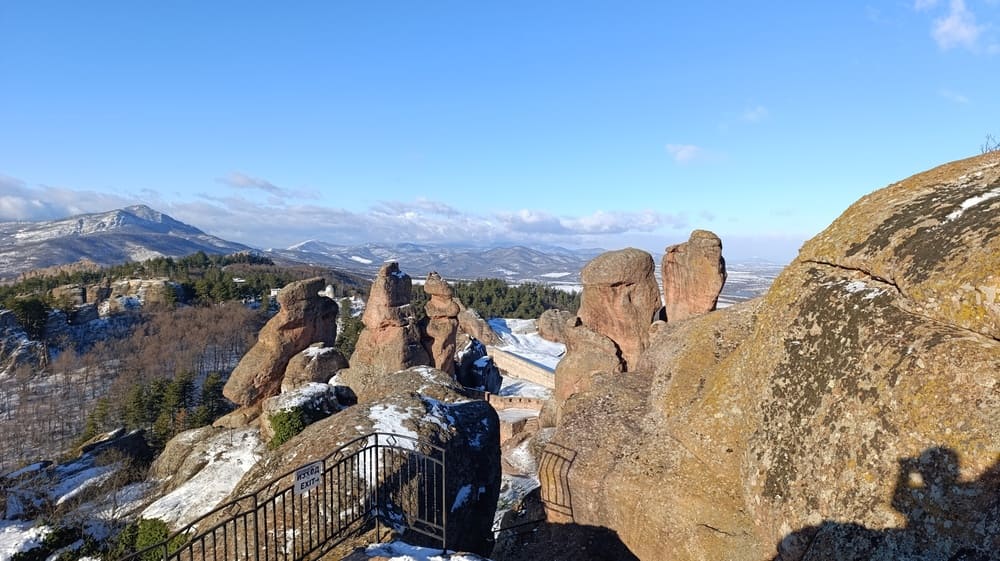
These massive red sandstone formations stretch across the entire area around the fortress, rising in all directions like natural towers. Some are tall and narrow, others wide and dramatic, but all of them feel almost sculpted rather than formed.
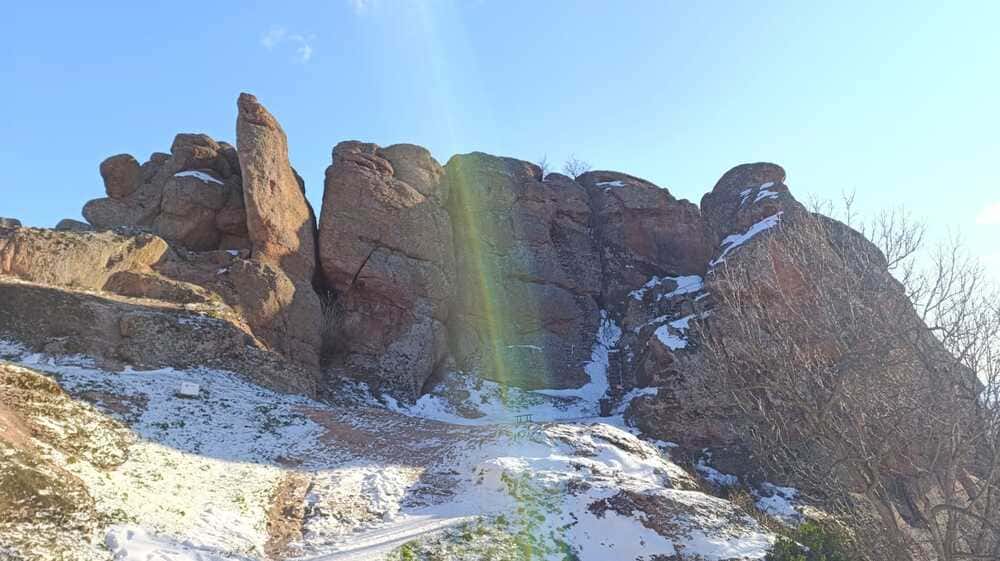
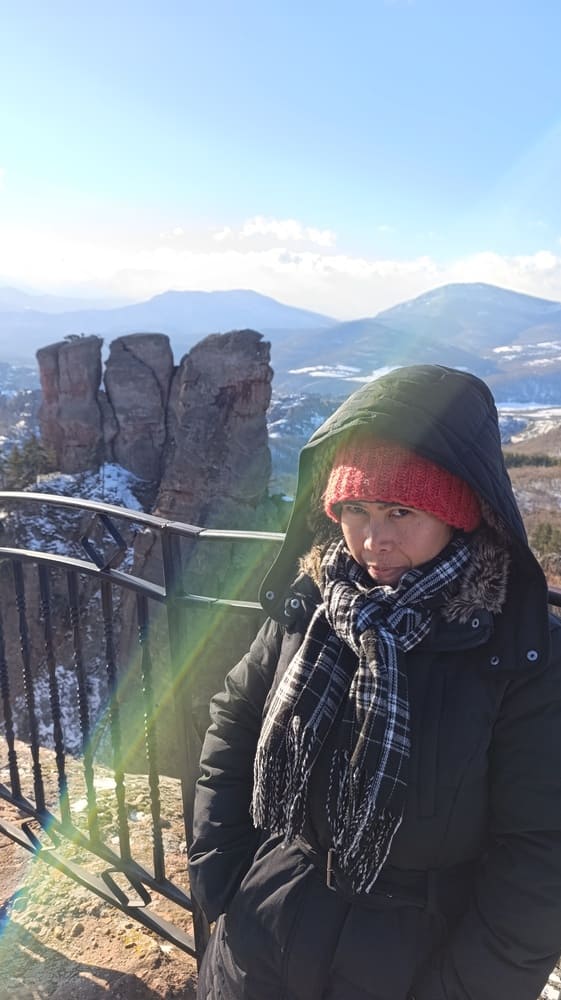
When I visited in January, the snow on the ground made the contrast even stronger. The rocks themselves weren’t fully covered, so their red and orange colors still showed through, standing above the white landscape. It felt like two seasons meeting in one place.
A Landscape Shaped by Nature
The Belogradchik Rocks are more than just a beautiful backdrop to the fortress. Stretching across northwestern Bulgaria, these towering red sandstone formations have been shaped by wind, rain, and erosion over millions of years.
As you explore the area, you’ll notice that many of the rocks resemble people, animals, and other unusual shapes. Locals have even given some of them names, including The Madonna, The Horseman, and The Monks.
Whether you’re interested in photography, hiking, or simply enjoying the scenery, the Belogradchik Rocks are the main reason to visit. Combined with the fortress perched among the cliffs, they create one of the most unique landscapes in Bulgaria.
Legends and Stories Behind the Belogradchik Rocks
Beyond their dramatic appearance, the Belogradchik Rocks are surrounded by local legends and folklore.
Over the centuries, people have given many of the rock formations names based on what they resemble. Some are said to look like monks, horsemen, castles, or human figures frozen in stone. According to local stories, many of these formations were once real people who were turned into rock as part of tales involving love, betrayal, and divine punishment.
Whether you believe the legends or not, they add another layer of fascination to the landscape. As you walk through the area, it’s easy to see why these unusual rock formations have inspired stories for generations.
Visiting Belogradchik in Winter
I visited Belogradchik in winter, and the snowy landscape made the fortress and rock formations feel even more dramatic.
The Belogradchik Rocks are impressive year-round, but seeing them dusted with snow creates a completely different atmosphere. The contrast between the white snow and the red sandstone cliffs makes the scenery especially beautiful for photography.
Winter also means fewer visitors, so it’s possible to enjoy the viewpoints without crowds. Just keep in mind that temperatures can be cold, and some paths may be slippery after snowfall. Warm clothing and sturdy shoes are essential.
If you don’t mind the cold, winter can be one of the most rewarding times to visit Belogradchik, especially for photographers and travelers looking for a quieter experience.
Exploring Belogradchik Fortress
The moment I stepped inside Belogradchik Fortress, it felt less like visiting a typical historical site and more like walking through a landscape shaped together by people and nature.
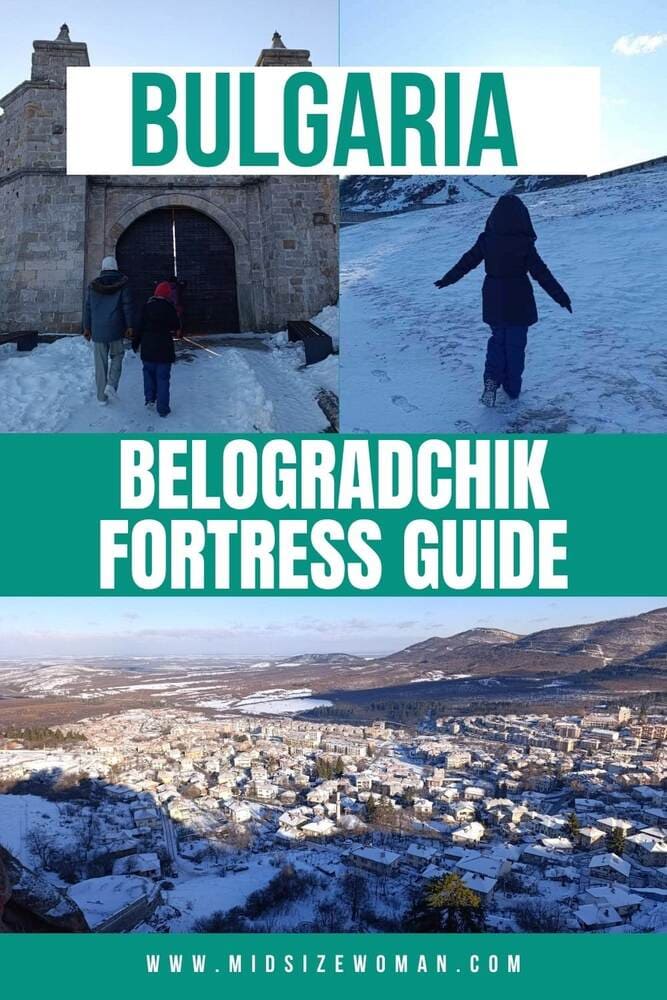
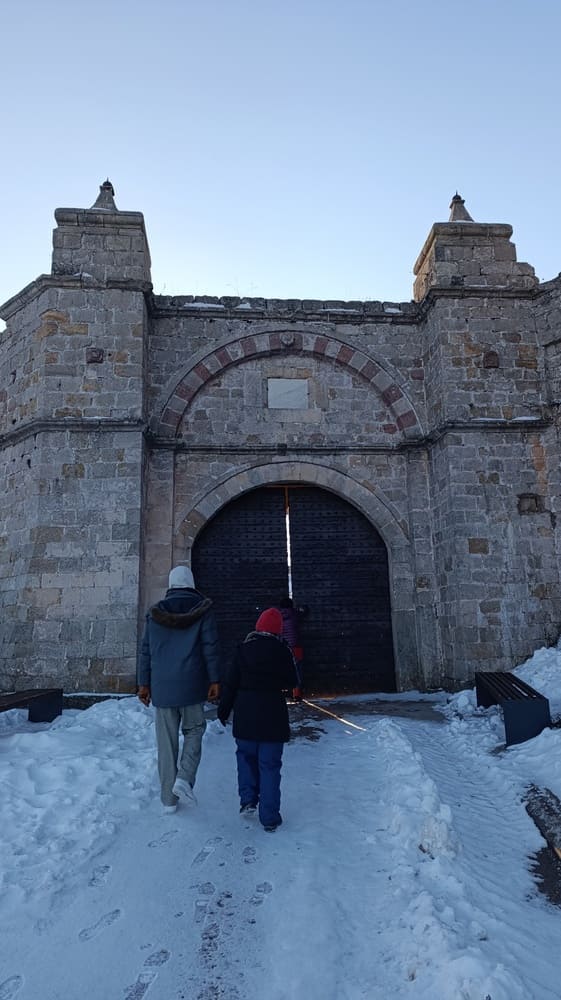
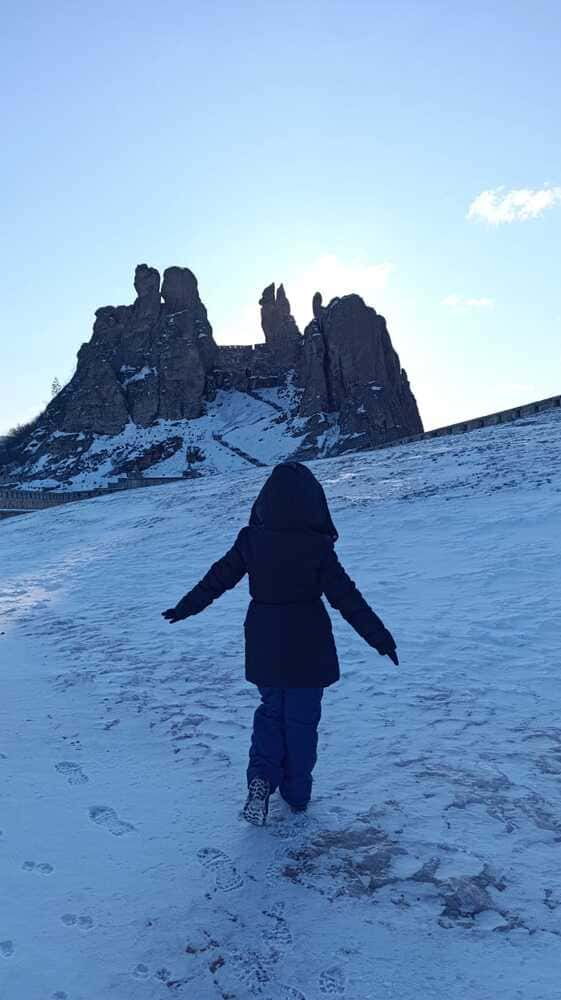
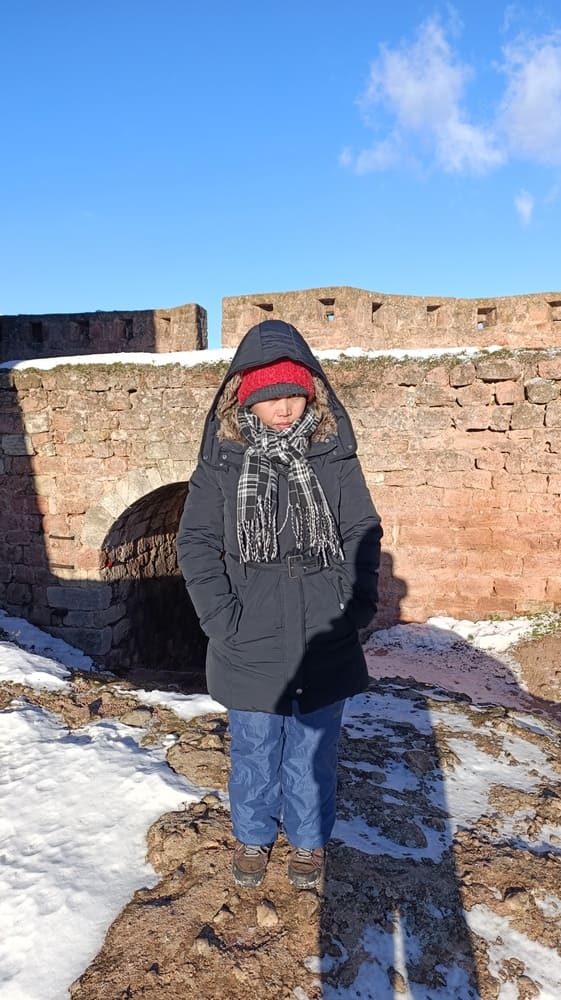
I visited in January, and everything was covered in snow. The entire fortress and the surrounding rocks looked completely different from the usual photos online. It was beautiful in a quiet, almost surreal way but also freezing cold. The wind made it feel even sharper at the higher viewpoints, so I kept moving just to stay warm.
The fortress is spread across different levels, with stone walls, narrow paths, staircases, and natural rock formations blending into each other. Instead of one enclosed structure, it stretches across the landscape, so you’re constantly moving between man-made defenses and massive natural cliffs.
What It’s Like
There’s usually a short guided introduction when you enter the fortress. In my case, there was a guide who explained the history and layout for about 30 minutes, which helped make sense of what I was seeing, how the fortress developed, how the rocks were used for defense, and how different sections were connected.
After the introduction, you’re free to explore on your own, which is when the visit really starts to feel more relaxed.
From that point, you can climb up to the higher sections and take your time walking through the fortress at your own pace.
Inside, I found:
- Old stone walls and gates
- Narrow walkways between rock formations
- Small towers and defensive points
- Open viewpoints overlooking the valley
- Quiet corners where the snow made everything feel even more still
Some parts feel more like a gentle climb than a structured route, especially as you head upward. It’s not difficult, but in winter conditions the snow made certain sections slower and more careful to walk through.
The mix of guided context first, then free exploration, actually worked really well, it made the place feel easier to understand without taking away the freedom to wander.
The Views
The higher I went, the more impressive the views became.
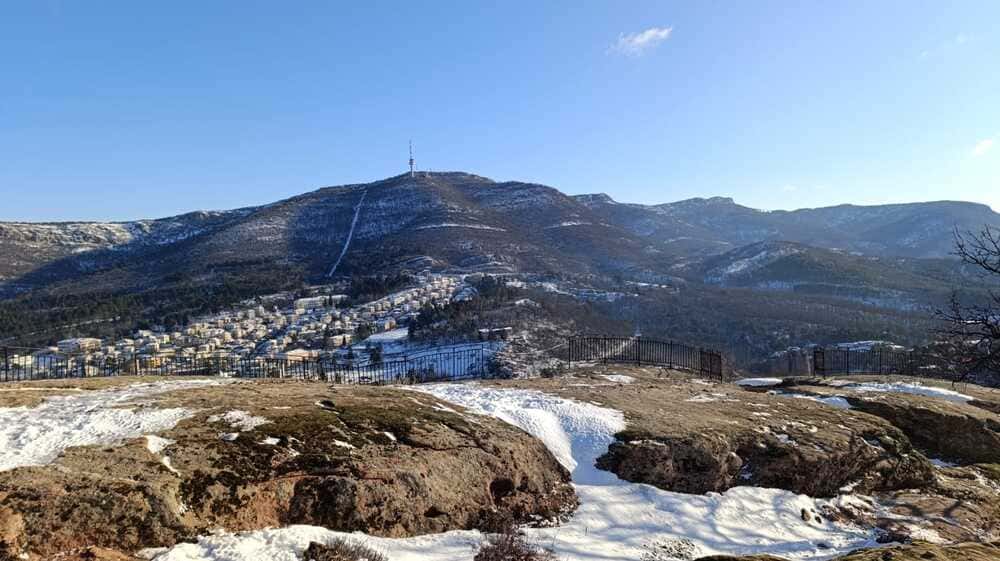
When I visited in January, the fortress yard and open ground were completely covered in snow, which made everything feel quieter and more atmospheric. The stone walls and the Belogradchik Rocks themselves weren’t fully covered, so you could still see their natural red and orange tones breaking through the winter landscape.
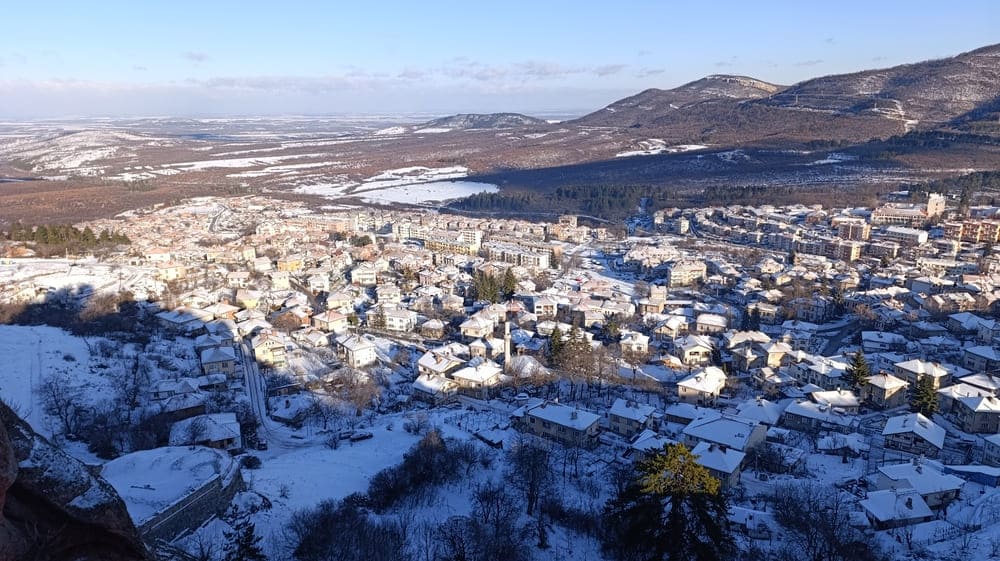
What stood out most was the contrast, the white snow on the ground, the dark stone paths, and the massive rock formations rising above it all. Down below, the nearby village looked almost magical with the snow. The rooftops, trees, and streets were lightly dusted, giving the whole area a calm, winter postcard feel.
It was one of those views where everything feels still, like the landscape is paused for a moment.
My Impression
What stood out most for me was how naturally the fortress fits into its surroundings. It doesn’t feel separated from the landscape, it feels like part of it.
Even without the history, the location alone would be worth visiting just for the views.
Being there in winter made it feel even more atmospheric. With the snow covering the ground and the cold wind moving through the rocks, it was easy to imagine how strong and strategic this place must have been back then. Standing on those walls, I could picture how the fortress once served as a real defensive stronghold, using the natural cliffs and heights to protect everything around it.
It felt quiet in the present, but at the same time, you could sense how powerful and important it must have been in the past.
Belogradchik Fortress Entrance Fee
Visiting Belogradchik Fortress is affordable and offers great value for the history and views you’ll experience. Here’s the current entrance fee for the fortress:
Standard Entrance Fee
- Adults: 10 BGN (approx. 5 EUR)
- Students: 5 BGN (approx. 2.5 EUR)
- Children: Free (under 7 years old)
Additional Information
- Guided Tours: If you’d like a more in-depth experience, guided tours are available for an additional fee. These typically cost around 15-20 BGN (approx. 8-10 EUR) per person, and tours are offered in both Bulgarian and English.
- Discounts: If you’re visiting with a larger group, check for any group discounts. It’s always a good idea to ask at the ticket counter.
- Opening Hours: The fortress is open year-round, though the hours may vary slightly in the off-season. During peak tourist months, it is usually open from 9:00 AM to 6:00 PM.
Is Belogradchik Worth Visiting?
Yes, it’s worth it.
Belogradchik is not the easiest place to reach from Sofia, and it’s not the kind of stop you casually pass by. But once you’re there, it feels completely different from most places in Bulgaria.
For me, the mix of the fortress and the Belogradchik Rocks is what makes it worth the trip. You don’t really get this kind of landscape anywhere else in the country.
Who It’s Good For
- People doing a road trip in Bulgaria
- Travelers looking for something outside the usual tourist spots
- Anyone who enjoys nature and open landscapes
- Photography or slow travel days
My Honest Opinion
It’s a long drive, and in my case it was freezing cold in January, but it didn’t take away from the experience.
The place is quiet, wide, and a bit raw in a good way. You’re not there for entertainment, you’re there to see something different. And it delivers on that.
If I have the chance, I would definitely visit again in summer just to see how different the landscape feels without the snow.
Tips for Visiting Belogradchik
A few small things made a big difference during my visit, especially since I went in winter. It’s not a difficult place to explore, but it helps to be a bit prepared.
Before You Go
- Check the weather – It changes the whole experience. Snow makes it magical, but also colder and slower to walk around.
- Wear proper shoes – Even without snow, the stone paths are uneven. In winter, some areas can get slippery.
- Start early from Sofia – The drive is around 3 hours each way, so you want enough daylight for exploring.
- Bring water and snacks – There aren’t many options once you’re inside the fortress area.
On Site
- Expect a short guided intro – There’s usually a guide explaining the history for around 30 minutes before you explore on your own.
- Take your time after the guide – The best part is wandering up to the viewpoints slowly.
- Give yourself at least 2–4 hours – It looks small at first, but there’s more to walk than expected.
Final Thought
Belogradchik wasn’t originally one of the places I was most excited about visiting in Bulgaria, but it ended up being one of the most memorable.
What makes it special isn’t just the fortress itself, but the way it’s built into the surrounding rock formations. Everywhere you look, the landscape feels dramatic and completely different from anywhere else I visited in Bulgaria.
If you’re spending a few days in Sofia and want to see a quieter side of the country, Belogradchik is well worth the drive. Just don’t forget your camera, the views are the kind that make you stop every few minutes for another photo.
You might like:
- The Ultimate Sofia Bulgaria Travel Guide
- Surva Festival: Bulgaria’s UNESCO-Recognized Kukeri Mask Festival
- Baba Vida Fortress in Vidin, Bulgaria