If you only have two days in Yogyakarta, I’d focus on three things: the temples, the food, and the city’s cultural landmarks.
Having lived in Jogja for two years, I’ve had plenty of time to explore the city beyond the usual tourist attractions.
This itinerary combines the places I kept returning to with the sights I recommend most to first-time visitors. It covers major landmarks like Borobudur, Prambanan, the Keraton, and Taman Sari, while leaving enough time to enjoy the city’s food scene and the local life.
Whether you’re visiting Yogyakarta as part of a longer trip around Java or just stopping by for a weekend, this itinerary will help you make the most of your time without feeling like you’re constantly rushing from one place to another.
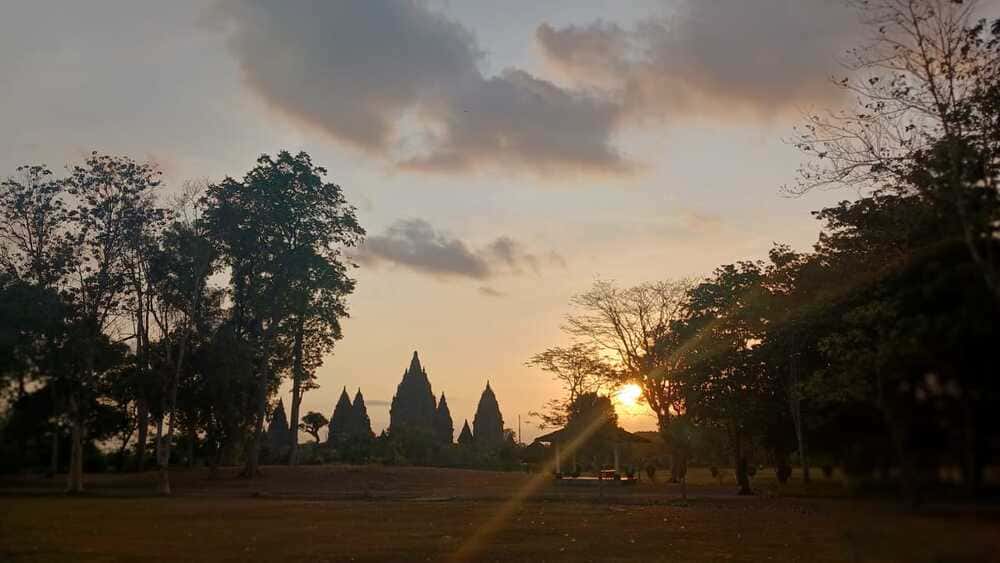
Before You Go: Planning Your Yogyakarta Trip
Yogyakarta is relatively easy to get around, and most of the places in this itinerary can be reached by car, scooter, or ride-hailing apps like Grab and Gojek. If you’re only visiting for two days, I recommend staying somewhere near Malioboro, Prawirotaman, or the city center to minimize travel time.
The best time to visit Yogyakarta is during the dry season from May to October, although the city can be visited year-round. Keep in mind that popular attractions like Borobudur and Prambanan can get busy on weekends, public holidays, and school vacation periods.
For this itinerary, I recommend starting early on both days, especially if you plan to visit Borobudur. The earlier you arrive, the cooler the weather and the smaller the crowds.
While two days is enough to see Yogyakarta’s main highlights, you could easily spend longer exploring the surrounding area, including Mount Merapi, Kotagede, and the beaches along the south coast.
Day 1: Exploring the Heart of Yogyakarta
Your first day in Jogja is all about getting to know the city. You’ll visit some of Yogyakarta’s most important cultural landmarks, explore the historic center, and spend the evening enjoying the local food option.
Most of today’s stops are located close to one another, making it an easy day without too much time spent in traffic.
1. Explore the Keraton (Yogyakarta Palace)
The Keraton Yogyakarta (Sultan’s Palace) is one of the most important cultural sites in the city and still functions as the residence of the Sultan today. It’s a good first stop in Jogja because it gives context for the history and culture you’ll see throughout the rest of the itinerary.
Visitor Info:
- Closed: Some public holidays (check locally before visiting)
- Opening hours: 8:30 AM – 2:00 PM
- Entrance fee: ~IDR 15,000–25,000 (local) / IDR 25,000–40,000 (international)
- Visit duration: 1–2 hours
Inside, you’ll find traditional Javanese architecture, open courtyards, and small museum-style exhibits about the royal family and history of the Sultanate.
Having lived in Jogja for two years, I usually recommend starting here because it makes everything else in the city easier to understand. It’s not a “wow” attraction visually, but it adds meaning to the rest of the places you’ll visit later.
It’s better to go early in the morning to avoid heat and tour groups, and bring cash for tickets.
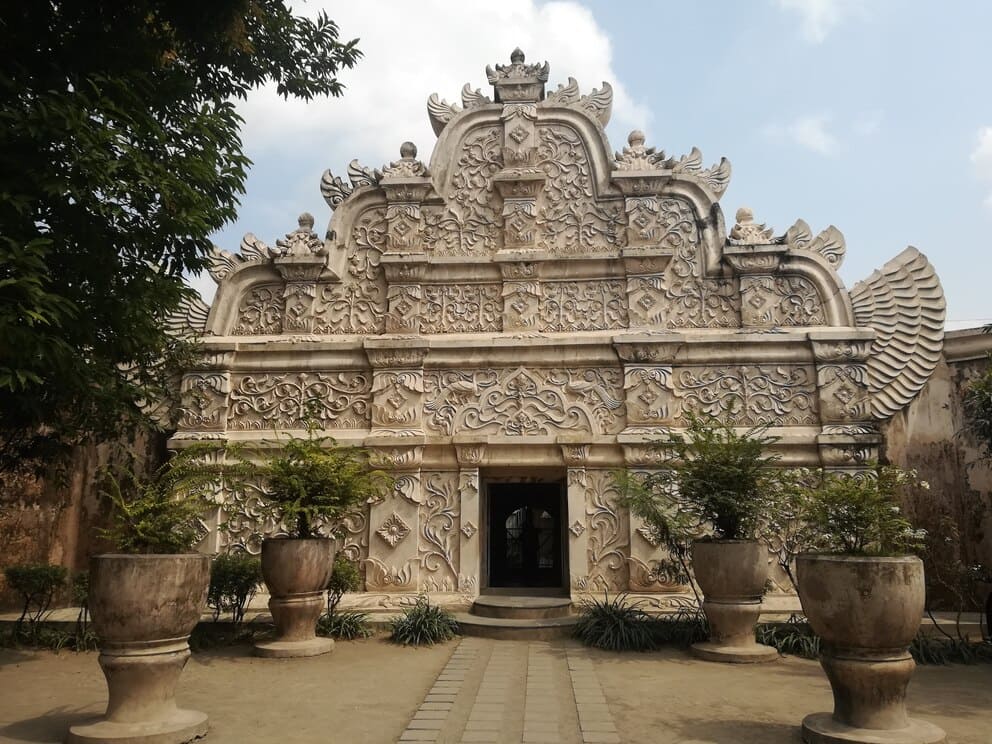
2. Taman Sari Water Castle
Taman Sari is a former royal garden and bathing complex built for the Sultan’s family. Today, it’s one of the most photogenic spots in Yogyakarta, with a mix of restored and partially ruined structures, underground passages, and water pools.
It’s located not far from the Keraton, so it makes sense to visit right after.
Visitor Info:
- Opening hours: 9:00 AM – 3:00 PM
- Entrance fee: ~IDR 15,000–25,000
- Visit duration: 1–1.5 hours
- Location: Short walk or quick ride from Keraton
Inside the complex, you’ll find the main bathing pool area, the old lookout towers, and a network of narrow alleyways in the surrounding village that are now part of the site experience.
Unlike the Keraton, Taman Sari feels more relaxed and less structured. You’ll likely end up wandering through small streets with local houses, which is part of the experience. It’s compact, so you don’t need a guide unless you want deeper historical context.
3. Alun-Alun Kidul (Southern Square)
Alun-Alun Kidul is a large open square located behind the Keraton. Like most alun-alun in Indonesia, it originally served as a public space for gatherings, royal ceremonies, and community events connected to the palace system.
The highlight here is actually the two large banyan trees in the center, which are tied to a local tradition where people try to walk between them blindfolded. In the evening, the area fills up with street food carts, pedal carts, and families hanging out.
To be honest, you do need to lower your expectations a bit. Compared to other alun-alun in Indonesia, this one is mostly just a big open field with trees in the middle. It’s not particularly scenic or activity-heavy on its own.
That said, I still find myself coming back here for one simple reason: the food. Don’t come expecting a major attraction. It works better as a casual stop for food and a bit of local atmosphere before or after Malioboro.
4. Malioboro, Jogja’s Iconic Street
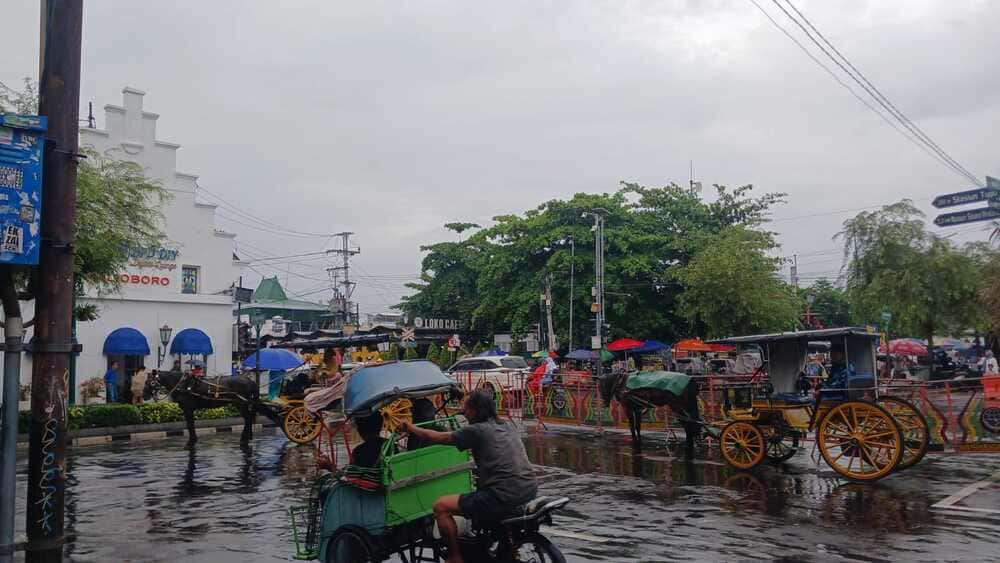
Malioboro is the most famous street in Yogyakarta and often the first place people think of when they hear “Jogja.” Almost every visitor ends up here at some point, whether they plan to or not.
The street is known as the city’s main walking area, lined with shops, street vendors, food stalls, batik stores, souvenir stands, and small local performances. It’s one of the busiest parts of the city and a place where you can easily spend an hour or two just walking around, eating snacks, and people-watching.
That said, it’s not a fully pedestrian-only street. There is still traffic running through it, especially scooters and cars on the main road, so it doesn’t feel like a traditional car-free promenade the entire time.
To be honest, it’s very touristy. But it’s still worth visiting at least once, just to see the atmosphere for yourself and understand why it’s so popular.
One thing I think first-time visitors should be aware of is the occasional scam targeting tourists. You might be approached by someone offering something like a “batik gallery visit” or saying it’s “only open today.” In reality, this often leads to a shop where you’re pressured to buy expensive items. The simplest way to handle it is just to politely say no and keep walking.
Enjoy Malioboro for what it is a busy, lively street in the center of the city but stay aware of your surroundings and don’t feel pressured to follow anyone offering “special” shopping experiences.
Day 2: Borobudur & Prambanan (Temple Day Trip)
Day 2 is focused on Yogyakarta’s two most famous temples: Borobudur and Prambanan. They are located outside the city center, so this is a longer travel day compared to Day 1 and requires an early start.
Both sites are UNESCO World Heritage Sites and are the main reason many people visit Yogyakarta in the first place. If you only have time for one full day of sightseeing outside the city, this is the one to prioritize.
Because of the distance and traffic, it’s best to either hire a driver for the day or join a tour that covers both temples. If you’re traveling on a budget and prefer to do it independently, you can also plan your own route using public transport and local ride-hailing apps, there’s a helpful breakdown in the Backpackmoments guide here
1. Borobudur
Borobudur is the largest Buddhist temple in the world and is located about 1.5–2 hours from central Yogyakarta, depending on traffic. It’s best visited early in the morning to avoid heat and crowds.
Visitor Info:
- Location: Magelang, about 40 km from Yogyakarta
- Opening hours: 6:30 AM – 4:30 PM
- Entrance fee: ~IDR 375,000 (international visitors, subject to change)
- Visit duration: 1.5–2.5 hours
The temple is made up of multiple stone levels covered in detailed carvings and Buddhist reliefs. Visitors can walk around the base and up through the terraces while learning about its symbolic structure.
To access the upper levels, tickets are usually limited per time slot, so it’s worth checking availability in advance.
2. Optional Stop: Gereja Ayam (Chicken Church)
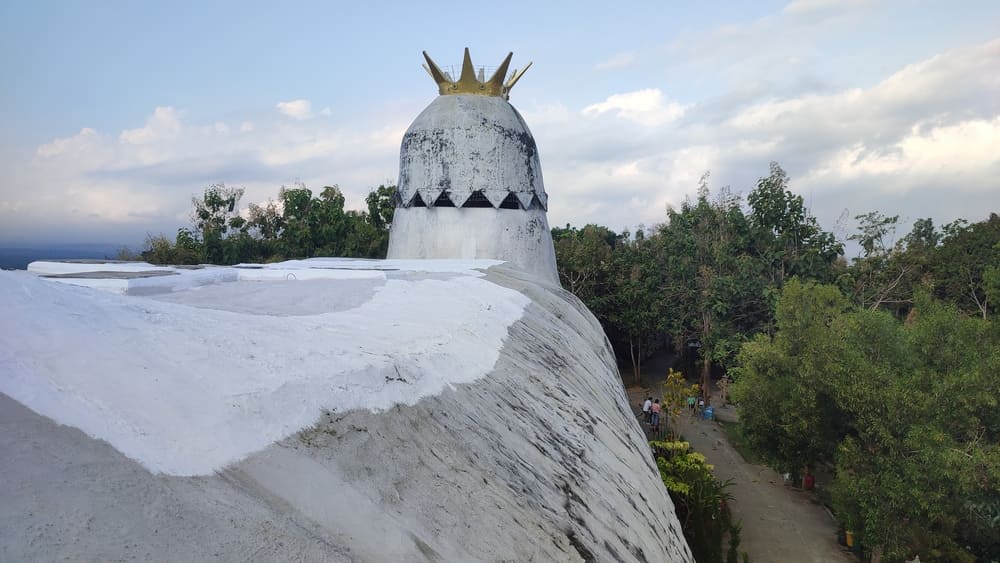
If you have extra time after visiting Borobudur, you can stop by Gereja Ayam, also known as the Chicken Church. It’s a hilltop building shaped like a dove (often mistaken for a chicken) and offers views over the surrounding Menoreh hills.
Visitor Info
- Location: Near Borobudur area
- Opening hours: 8:00 AM – 5:00 PM
- Entrance fee: ~IDR 25,000–50,000 (varies by access level)
- Visit duration: 30–60 minutes
The building was originally intended as a prayer house for people of different religions, but it became more famous after appearing in films and social media.
Inside, there are murals and small exhibition rooms, and you can climb to the head area for a panoramic view if it’s open.
Only include this stop if you’re not rushing between Borobudur and Prambanan. It’s close to Borobudur, so it works best as a short detour rather than a main destination.
3. Prambanan Temple
Prambanan is the largest Hindu temple complex in Indonesia and is closer to Yogyakarta city, about 45–60 minutes away from Borobudur depending on traffic patterns.
Visitor Info:
- Opening hours: 6:30 AM – 5:00 PM
- Entrance fee: ~IDR 375,000 (international visitors, subject to change)
- Visit duration: 1.5–2 hours
- Location: Eastern Yogyakarta
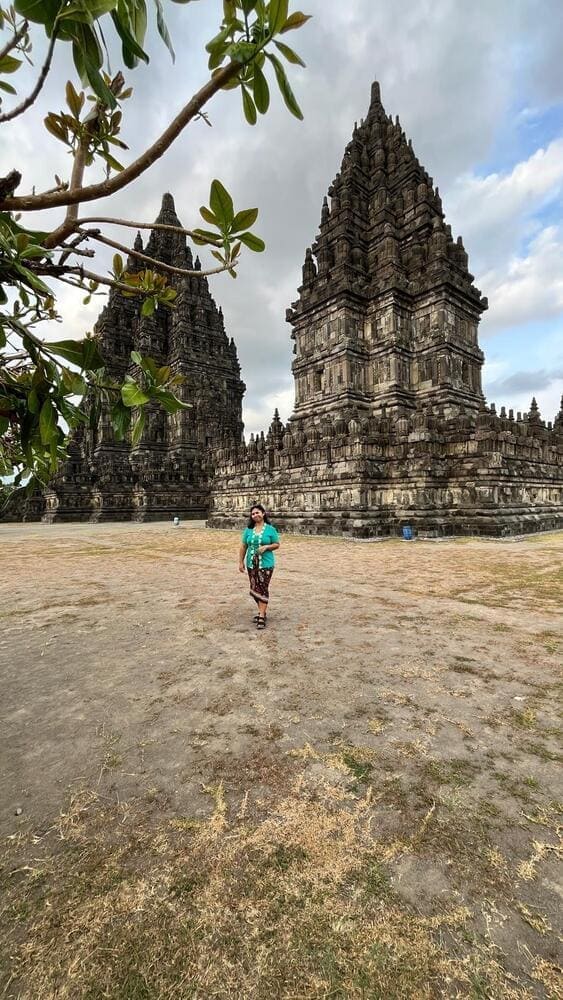
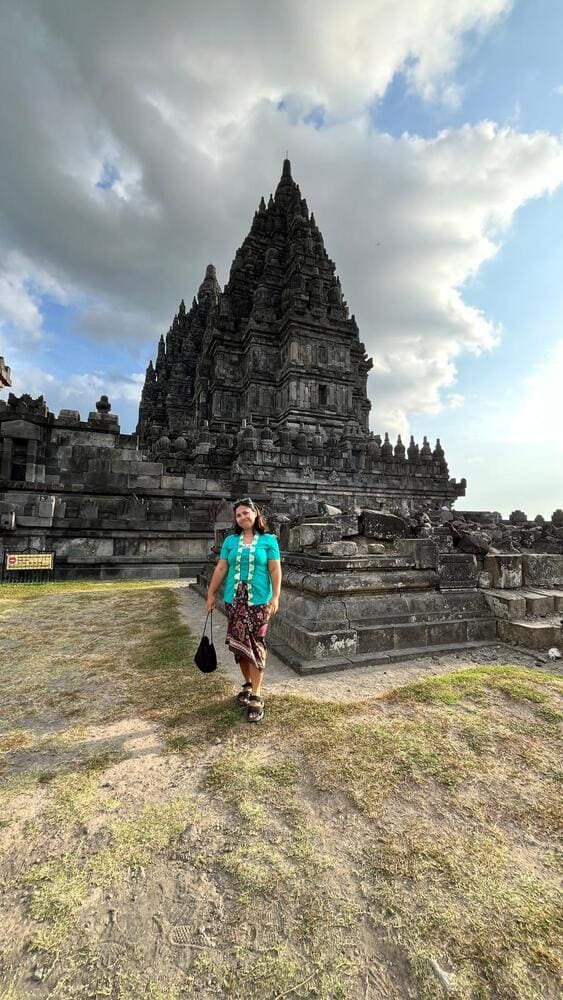
The main temple complex is dedicated to the Hindu trinity and is known for its tall, pointed architecture and detailed stone carvings. Compared to Borobudur, Prambanan feels more vertical and structured, with the main temples clustered in one central area.
If you have time, this is also where the Ramayana Ballet is performed in the evening at an open-air stage near the complex.
4. Prawirotaman (Evening Chill Area)
If you end your day back in the city and still have energy, Prawirotaman is one of the more relaxed areas in Yogyakarta to spend the evening. It’s known for its cafés, boutique hotels, restaurants, and bars, and it has a more international feel compared to other parts of the city.
To be honest, I don’t usually come here unless I’m meeting someone or going to a specific café. The main reason I personally end up in Prawirotaman is ViaVia Bakery (they have good cookies and cake).
One thing to note is that prices here are generally higher than in most of Yogyakarta. Restaurants and bars in this area cater more to international visitors and long-term expats, so it doesn’t feel as budget-friendly as other parts of the city.
FAQ: What’s Not Included in This Yogyakarta Itinerary?
The Mount Merapi Jeep Tour is one of the most popular activities in Yogyakarta, but it takes at least half a day and is better suited as an extra trip outside this 2-day plan.
The beaches in southern Yogyakarta are quite far from the city and require a full trip on their own. With only two days, they don’t fit well into the main itinerary.
Yes, it’s one of the best museums near Yogyakarta. It’s not included here only because it’s located north of the city and would make the schedule too rushed for a 2-day trip.
Kotagede is a historic area known for silver workshops and old Javanese architecture. It’s worth visiting if you have extra time, but it’s optional for a short stay.
If you have more than two days, I’d recommend adding Mount Merapi, Ullen Sentalu Museum, Kotagede, or a day trip to the southern beaches.
Final Thoughts
Is 2 Days in Yogyakarta Enough?
Two days in Yogyakarta is enough to see the main highlights, but it’s definitely a fast-paced trip. Most of your time will go into visiting temples outside the city, so the key is planning your days properly rather than trying to fit in too many extra stops.
If I were to sum it up, this itinerary works best if you:
- Want to see Borobudur and Prambanan in one trip
- Are okay with a full day of travel on Day 2
- Prefer a mix of culture, history, and easy city exploration
If you have more time, I’d personally slow things down and add at least one extra day. That gives you space to visit places like Mount Merapi, Kotagede, or just spend more time exploring cafés and smaller neighborhoods without rushing.
Having lived in Jogja for two years, I still think this city is best experienced at a slower pace. But if you only have a weekend, this is a realistic way to see the main highlights without feeling like you completely missed the point of the city.
I also have another article where I share more nature spots around Jogja if you want to explore beyond the temples and the city: Explore Jogja Nature: Best Outdoor Things to Do in Yogyakarta.

Related posts:
 Sailing in Labuan Bajo: My Honest Guide to Komodo Island
 One Month in Bali: My Honest Slow Travel Guide (Budget, Digital Nomad & Local Tips)
 Explore Jogja Nature: Best Outdoor Things to Do in Yogyakarta
 How to Visit Tumpak Sewu Waterfall from Malang or Lumajang (Full Guide + Tips)
 Bali vs Phu Quoc: Which Is Better for Digital Nomads? My Experience
Leave a Reply