Vietnam is one of Southeast Asia’s top destinations for food lovers. The country’s cuisine is known for its fresh ingredients, aromatic herbs, and balanced flavors, with each region offering its own specialties and cooking traditions.
If you’re planning a trip and wondering what to eat in Vietnam, this guide covers 13 must-try Vietnamese dishes to add to your list.
From popular street food favorites to regional specialties, these dishes offer a great introduction to Vietnamese cuisine and the flavors you’ll discover across the country.
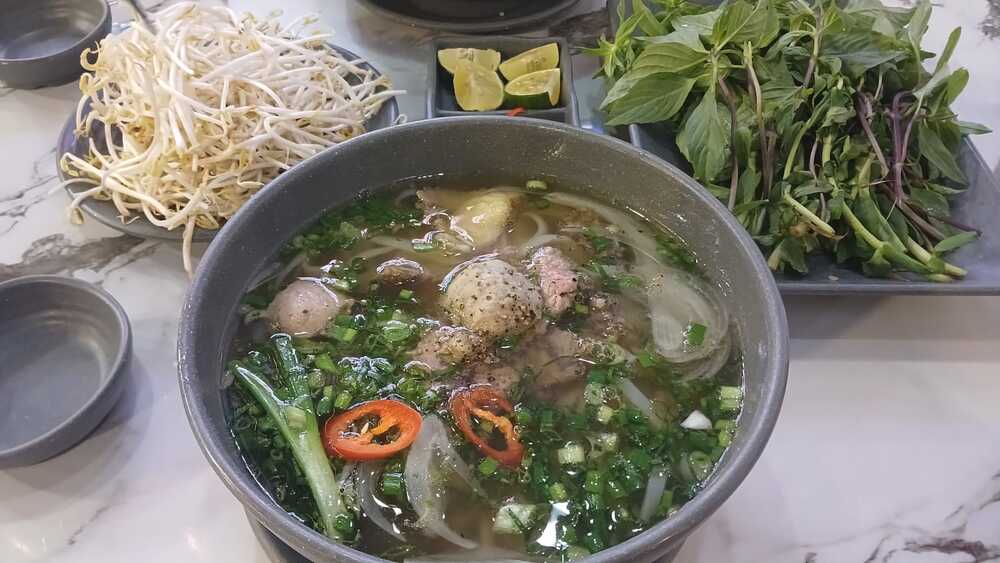
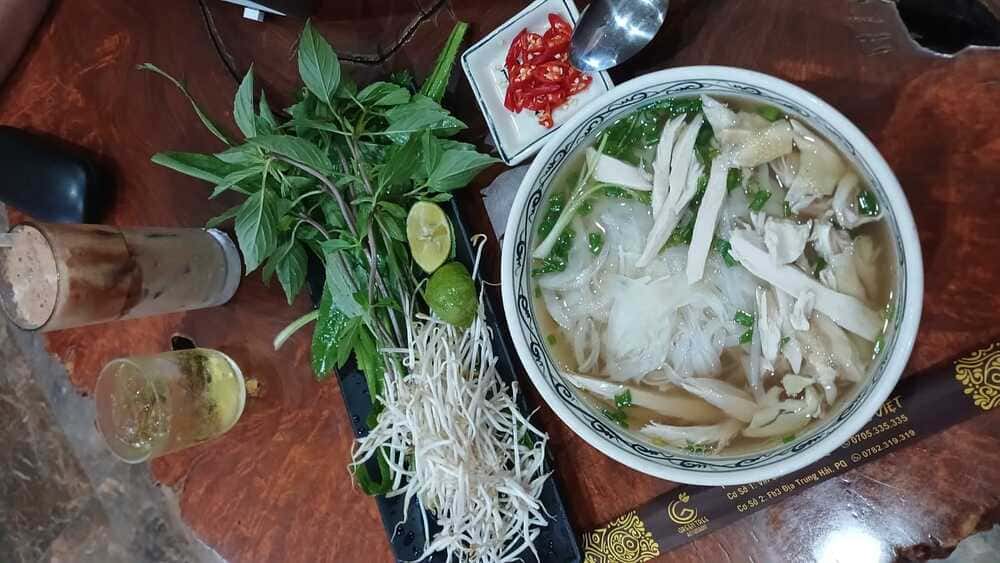
1. Pho
Pho is Vietnam’s most famous noodle soup and one of the country’s most iconic dishes. It typically consists of rice noodles served in a flavorful broth with beef or chicken, then topped with fresh herbs and other garnishes.
Although pho can be found throughout Vietnam, it is closely associated with Hanoi, where the dish originated. Many locals enjoy it for breakfast, but it’s served at all hours of the day.
It’s easy to see why pho has become synonymous with Vietnamese food. Whether enjoyed on a small plastic stool at a busy street-side eatery or in a family-run restaurant, a steaming bowl of pho is often one of the first meals travelers remember from their time in Vietnam.
I had it for breakfast almost every day in Phu Quoc, the best pho was just next door to my hotel.
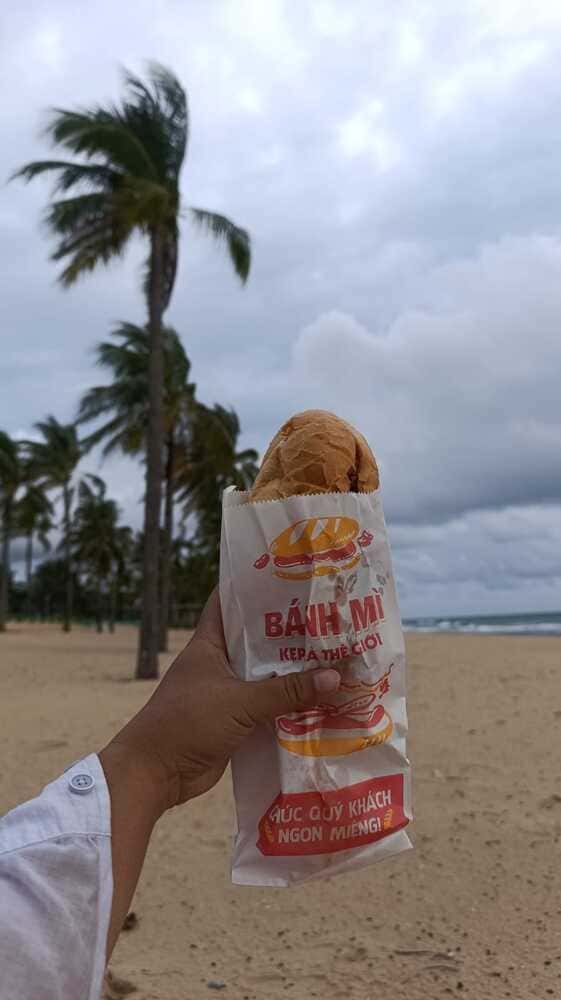
2. Banh Mi
Banh Mi is Vietnam’s famous street food sandwich, made with a crispy French-style baguette filled with a mix of savory ingredients. Common fillings include pork, pate, cold cuts, pickled vegetables, cucumber, chili, and fresh herbs.
The sandwich reflects Vietnam’s history, blending local flavors with French influence in a way that has become uniquely Vietnamese. You’ll find banh mi stalls everywhere, from busy city corners to small family-run shops.
It’s one of those foods that’s easy to grab on the go, but still full of contrast and texture in every bite. The crunch of the bread, the richness of the fillings, and the freshness of the herbs all come together in a simple, satisfying meal that works at any time of day.
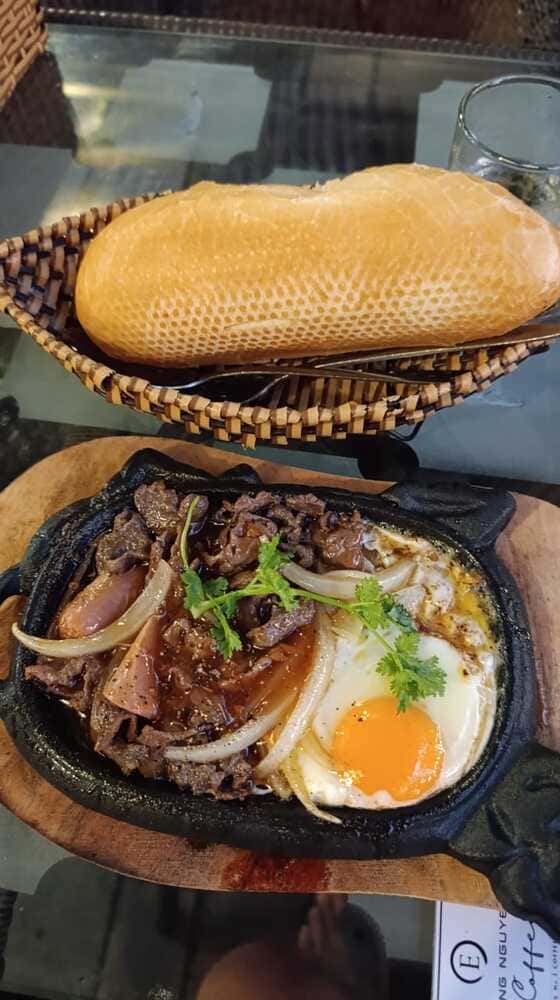
3. Bun Cha
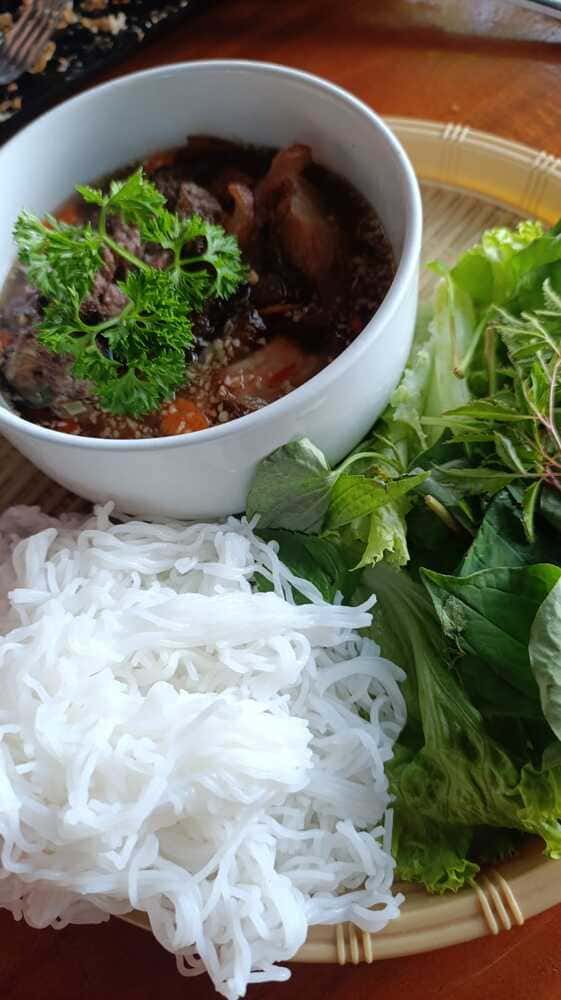
Bun Cha is a Hanoi specialty made with grilled pork served over rice noodles, fresh herbs, and a side of dipping sauce. The pork is usually cooked over charcoal, giving it a smoky flavor that pairs well with the lightness of the noodles and herbs.
It’s a dish that’s closely tied to daily life in Hanoi and is often eaten for lunch. You’ll usually see locals sitting down quickly for a bowl, dipping noodles into the broth and wrapping everything with herbs as they go.
There’s something simple and direct about bun cha. Nothing feels overcomplicated, just grilled meat, noodles, and herbs working together in a way that feels balanced and satisfying, especially when eaten at a small street-side table in the middle of the city.
4. Cao Lau
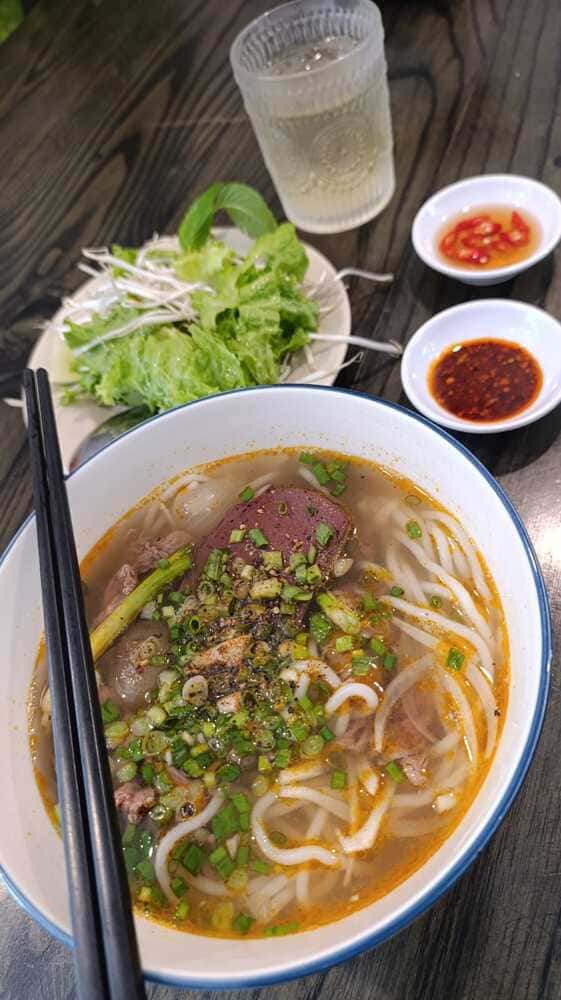
Cao Lau is a signature dish from Hoi An, a historic town in central Vietnam. It features thick rice noodles, slices of pork, fresh herbs, and crispy croutons, all brought together with a small amount of savory sauce rather than a full broth.
What makes Cao Lau unique is the texture of the noodles, which are said to be made using water from old local wells and ash from specific trees, giving them a distinct chew and color. Whether every detail of its origin story is strict tradition or local lore, the result is a dish that feels closely tied to Hoi An’s identity.
It’s the kind of meal you’ll often find in small family-run shops around the old town, best enjoyed while walking through the lantern-lit streets after a day of exploring.
5. Banh Xeo
Banh Xeo is a Vietnamese savory pancake made from rice flour, turmeric, and coconut milk, cooked until the edges turn crispy and golden. It’s usually filled with pork, shrimp, and bean sprouts, then folded in half like a crepe.
You’ll often hear it before you see it, the loud sizzle of batter hitting a hot pan is where the name comes from. It’s typically served with a large plate of fresh herbs and lettuce, and eaten by wrapping pieces of the pancake in greens before dipping into a light fish sauce.
It’s a hands-on dish that feels more like an experience than a meal. The contrast between the crispy edges, soft filling, and fresh herbs makes it one of the more memorable street food dishes in Vietnam.
6. Hu Tieu
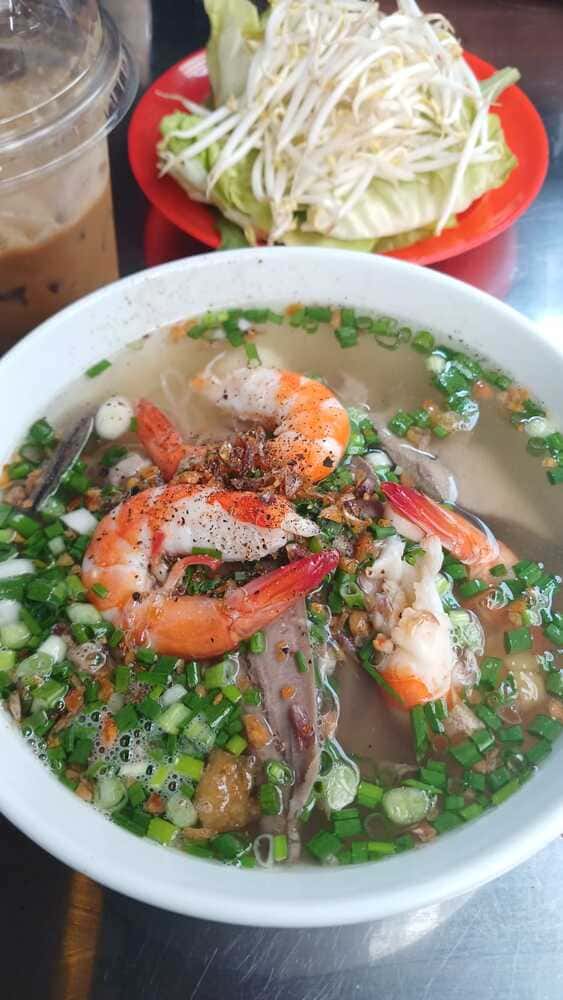
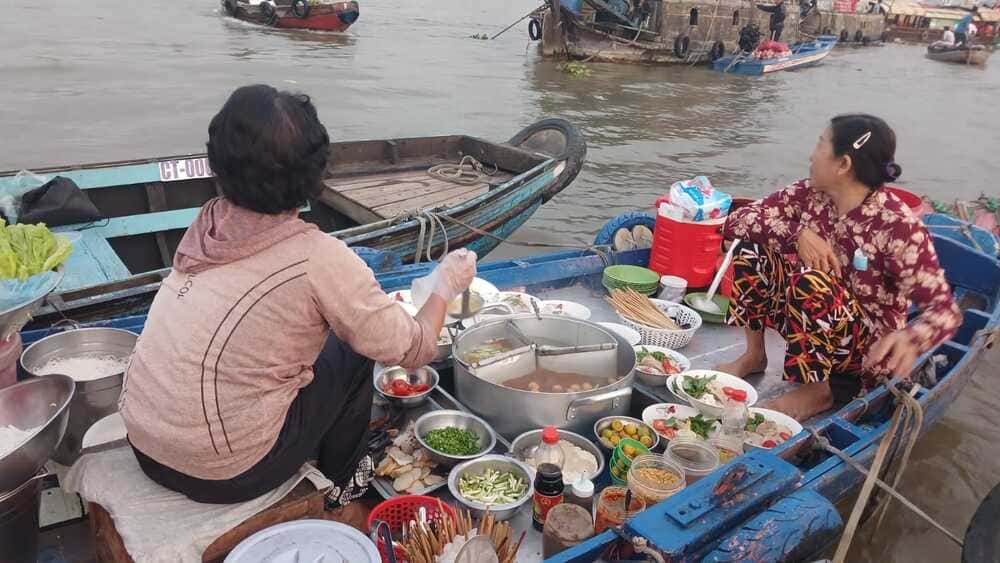
Hu Tieu is a popular noodle dish from southern Vietnam, especially associated with Ho Chi Minh City and the Mekong Delta. It’s typically made with a clear, slightly sweet pork-based broth and served with rice or egg noodles, along with toppings like pork slices, shrimp, quail eggs, and herbs.
One of the interesting things about hu tieu is how flexible it is. You’ll find both dry versions, where the noodles are served separately from the broth, and soup versions where everything comes together in one bowl. Each variation has its own balance of flavors and textures.
It’s a dish that reflects everyday eating in southern Vietnam, simple, customizable, and often enjoyed at small street-side shops in the morning or late afternoon.
7. Com Tam
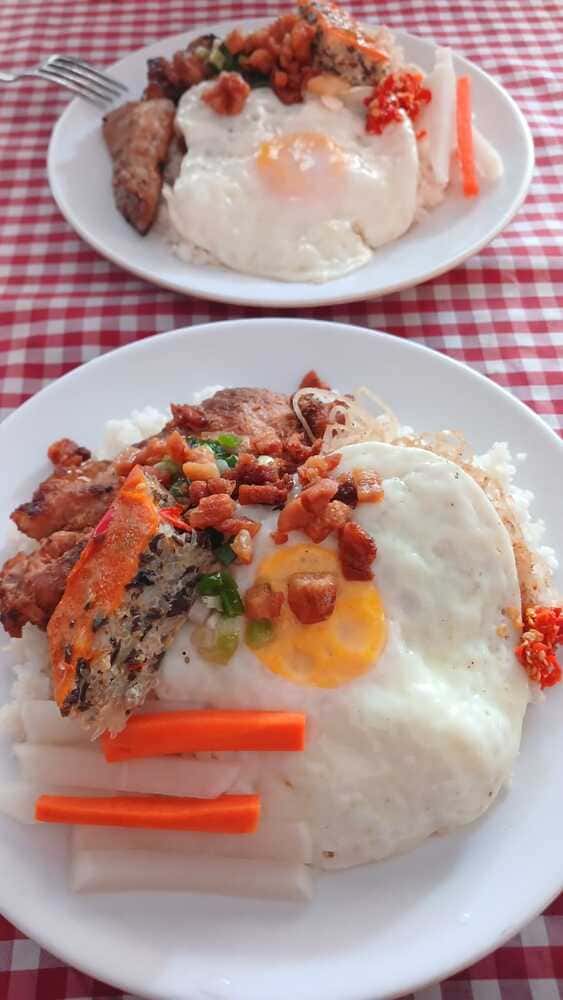
Com Tam, or broken rice, is a classic dish from southern Vietnam, especially popular in Ho Chi Minh City. It’s made with fractured rice grains served with grilled pork, a fried egg, shredded pork skin, pickled vegetables, and a side of fish sauce.
Originally considered a “working-class” meal because broken rice was less expensive, it has become one of the most common everyday dishes in the south. Today, you’ll find it everywhere, from simple street stalls to full sit-down restaurants.
It’s the kind of meal that feels straightforward but complete. The mix of grilled meat, rice, and savory-sweet fish sauce makes it a reliable choice any time of day, especially for a filling lunch.
8. Goi Cuon
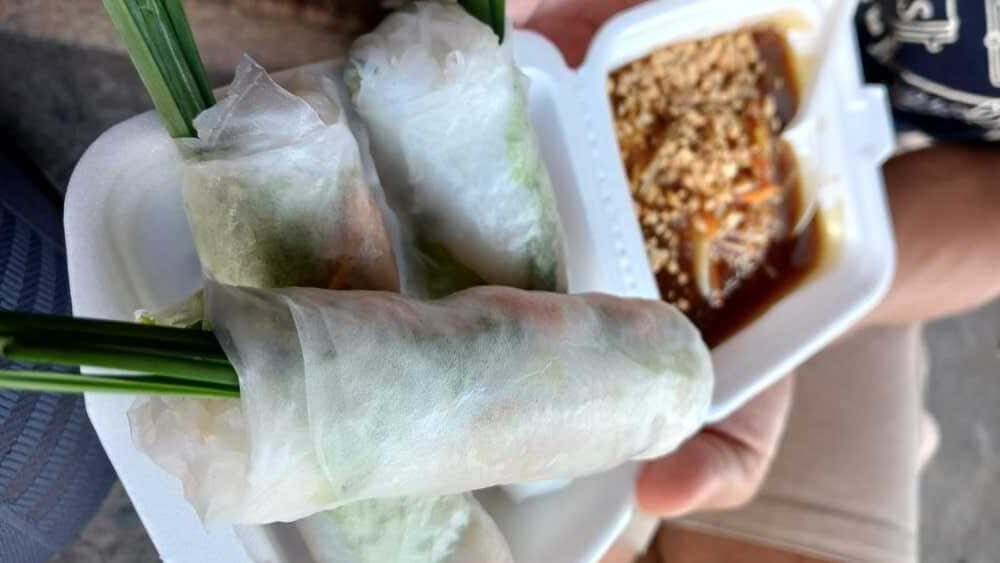
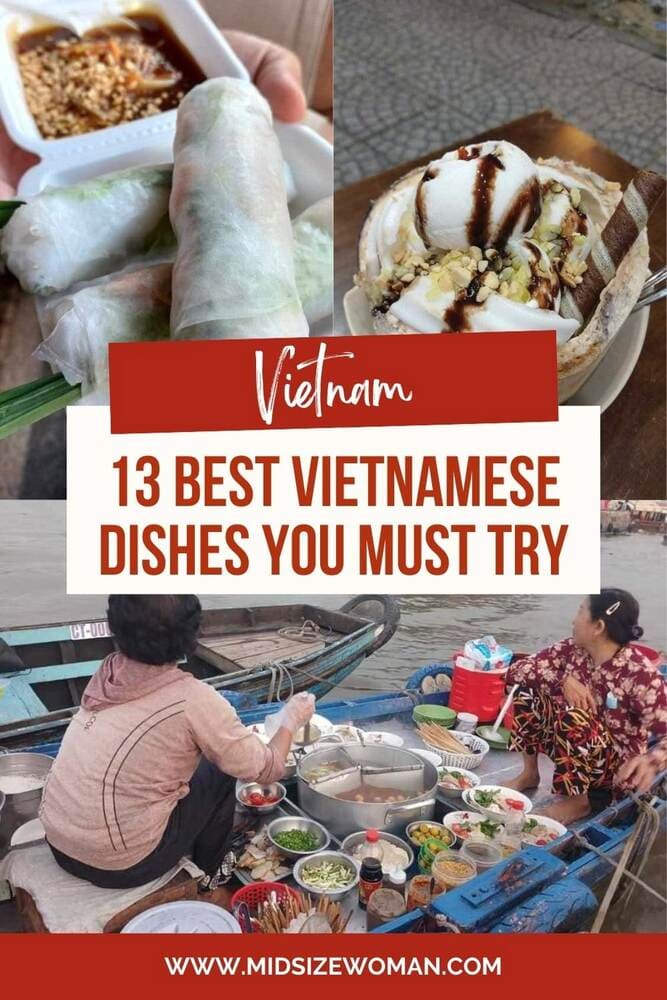
Goi Cuon, also known as fresh spring rolls, are made by wrapping rice paper around shrimp, pork, rice noodles, and fresh herbs. They are served cold and rely on fresh ingredients rather than frying or heavy seasoning.
These rolls are usually paired with a dipping sauce, such as a hoisin-peanut sauce or a light fish sauce blend depending on the region. The flavor is subtle, with most of the taste coming from the herbs, protein, and dipping sauce working together.
It’s one of the lighter Vietnamese dishes and often shows up as a starter or shared plate. For many travelers, it’s an easy introduction to Vietnamese flavors before moving on to more intense or savory dishes.
9. Cha Ca
Cha Ca is a famous dish from Hanoi made with turmeric-marinated fish, typically catfish or snakehead fish, cooked with dill and green onions at the table. It’s usually served in a hot pan, where the fish continues to sizzle as you eat.
The dish is eaten with rice noodles, fresh herbs, peanuts, and a fermented shrimp sauce called mam tom. The combination might feel intense at first, but it comes together in a rich, aromatic way once everything is mixed.
What makes cha ca stand out is the experience itself. It’s not just a plate of food, but something you assemble and eat as it cooks, often shared with others around a small table in a busy Hanoi restaurant.
10. Kem Bo
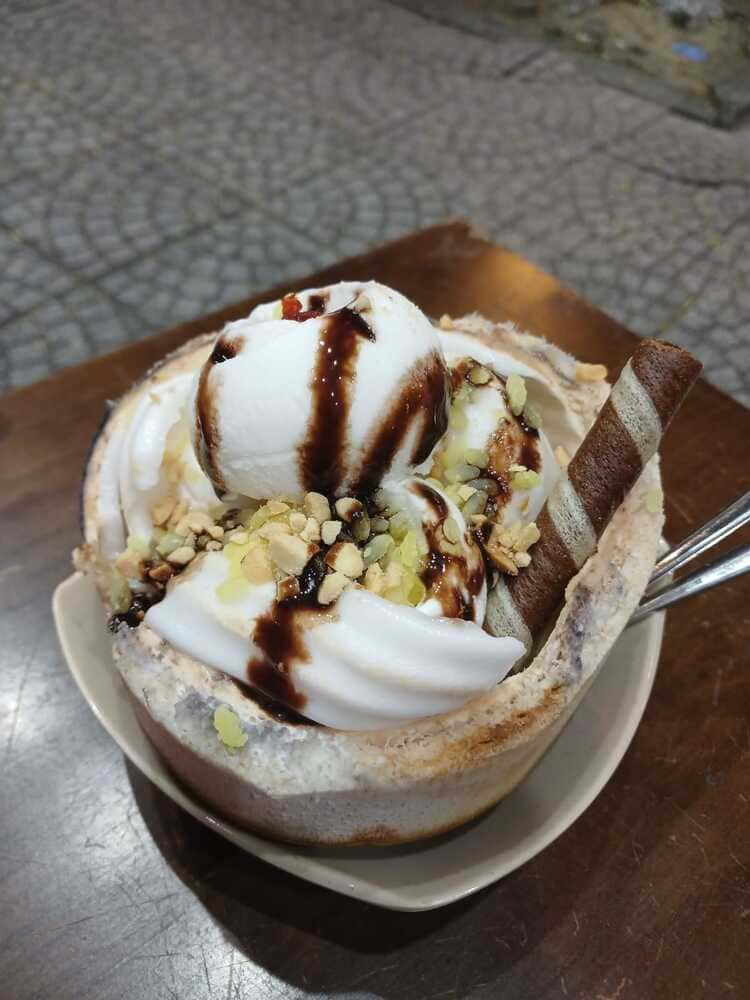
Kem Bo is a popular dessert from Da Nang made with avocado blended into a smooth, creamy base and topped with coconut ice cream, condensed milk, and sometimes crushed nuts or coconut flakes.
The texture is what makes it stand out. The avocado gives it a rich, almost mousse-like consistency, while the coconut ice cream adds sweetness and contrast. It’s usually served cold, making it especially popular in Vietnam’s warm coastal cities.
You’ll often find it in small dessert shops or night markets, where it’s served as a quick treat after a day of eating street food. It’s simple, but it’s one of those desserts that tends to surprise travelers who try it for the first time.
11. Nem Ran (Cha Gio)
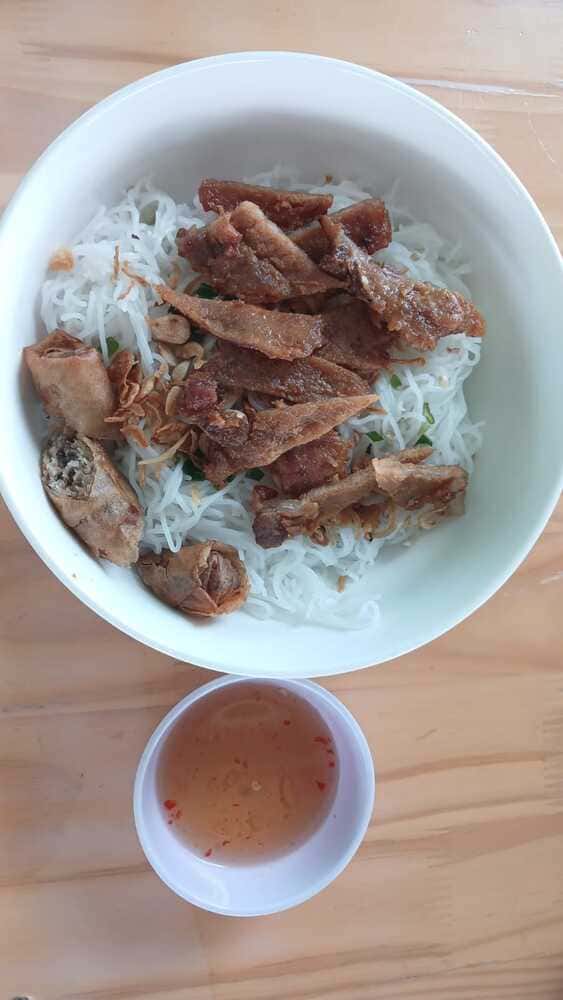
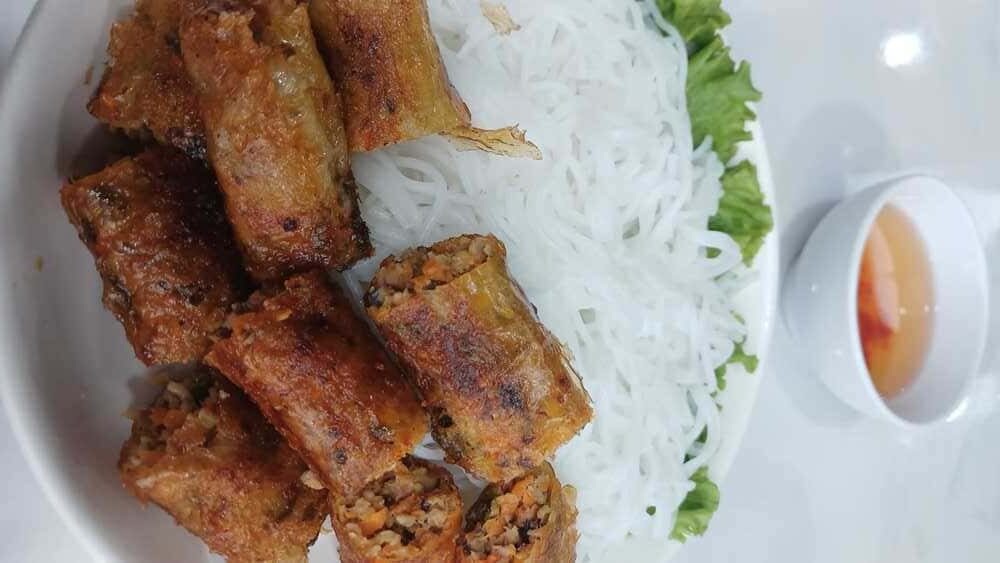
Nem Ran, also known as Cha Gio in the south, are Vietnamese fried spring rolls made with a thin rice paper wrapper filled with ground pork, shrimp, glass noodles, mushrooms, and vegetables. They are deep-fried until golden and crispy on the outside.
They’re usually served with fresh herbs, lettuce, and a dipping sauce made from fish sauce, vinegar, sugar, and garlic. In some regions, you’ll also find them paired with pickled vegetables or rice noodles for a more filling meal.
Nem Ran is a common dish during family meals and celebrations, but it’s also widely available at street food stalls and restaurants. The contrast between the crispy shell and savory filling makes it one of the most familiar and widely loved Vietnamese appetizers.
12. Mi Quang
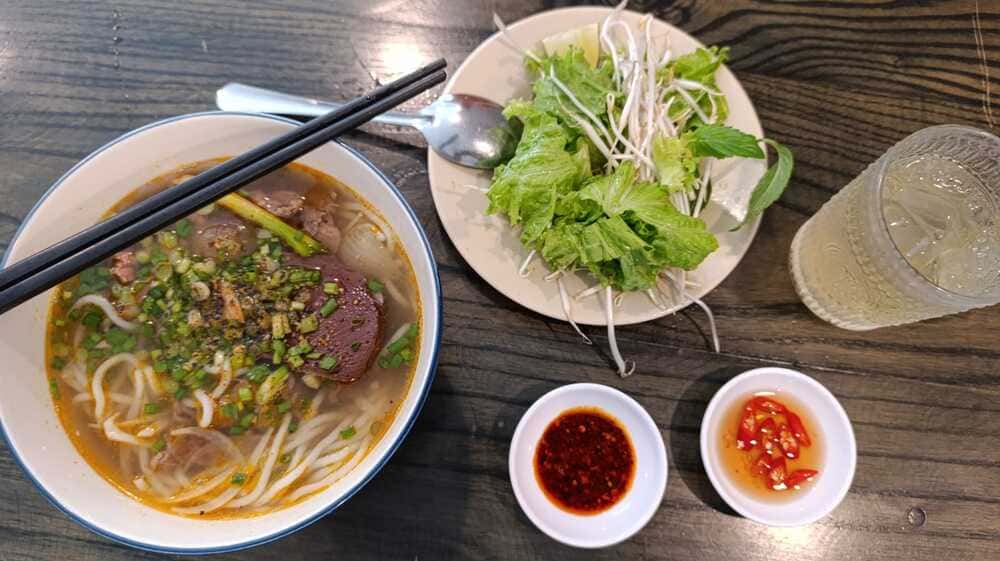
Mi Quang is a signature noodle dish from central Vietnam, especially associated with Da Nang and Quang Nam province. It’s made with wide rice noodles, a small amount of flavorful broth, and toppings like shrimp, pork, chicken, or sometimes fish.
Unlike most Vietnamese noodle soups, mi quang is not fully submerged in broth. Instead, it has just enough liquid to coat the noodles, making it closer to a mixed noodle dish than a traditional soup. It’s typically served with fresh herbs, peanuts, rice crackers, and a squeeze of lime for added flavor.
The dish reflects central Vietnam’s cooking style, simple ingredients, bold seasoning, and a strong focus on texture. You’ll often find it served in casual local eateries, especially in Da Nang, where it’s a common everyday meal.
13. Lau Hai San
Lau Hai San, or seafood hotpot, is a popular shared dish in Vietnam, especially in coastal cities. It’s typically served as a bubbling pot of broth placed in the center of the table, with fresh seafood like shrimp, squid, clams, and fish cooked at the table as you eat.
The broth is usually light and slightly sour or savory, designed to enhance the natural sweetness of the seafood rather than overpower it. It’s eaten slowly, with diners adding ingredients as they go and pairing it with fresh herbs, vegetables, and noodles.
More than anything, lau hai san is a social meal. It’s the kind of dish you order with a group, where the focus is less on individual portions and more on sharing time at the table. For many travelers, it becomes a memorable part of evenings in Vietnam, especially near the coast.
FAQ: Vietnamese Food Travel Guide
Pho is generally considered the most famous Vietnamese dish internationally. It’s a noodle soup made with broth, rice noodles, herbs, and either beef or chicken.
Most Vietnamese dishes are not very spicy by default. Instead, flavor comes from herbs, fish sauce, citrus, and slow-cooked broths. Chili is usually added separately if desired.
Many Vietnamese dishes are considered balanced because they use fresh herbs, vegetables, lean proteins, and light broths. However, fried dishes like Nem Ran or Banh Xeo are more indulgent options.
Most food in Vietnam is safe when eaten at busy, reputable places. A general rule is to choose stalls or restaurants with high turnover where food is cooked fresh.
Is Vietnamese food halal?
Vietnamese cuisine is generally not halal by default, as pork and non-halal cooking practices are common in many traditional dishes and local restaurants.
However, halal food in Vietnam is available, especially in larger cities such as Ho Chi Minh City and Hanoi, where you can find halal-certified restaurants, Muslim-friendly eateries, and some international dining options. These places often serve dishes made with beef, chicken, or seafood prepared according to halal standards.
For travelers looking for halal food in Vietnam, it’s best to search specifically for halal-certified restaurants or check menus carefully before ordering. Many tourist areas are becoming more accommodating, but options may still be limited compared to other Southeast Asian destinations.
Final Thoughts
Vietnam is one of those destinations where food becomes a big part of the travel experience. From simple street-side bowls of pho to regional dishes like cao lau and mi quang, each meal offers a small look into local life and how different parts of the country cook and eat.
There’s no need to try everything in one trip. Most travelers end up discovering their favorites naturally while exploring cities, markets, and small local eateries along the way. Some dishes are light and fresh, others are rich and filling, but they all reflect the variety of Vietnamese cuisine.
If you’re planning a trip, this list is a good starting point for what to eat in Vietnam. The best way to enjoy it is simply to be open, try new things, and follow where the food leads you.
You might also like:
- 11 Authentic Thai Dishes You Need to Try in Thailand
- What to Eat in Malaysia: 8 Must-Try Foods + Durian
- What to Eat in Hat Yai, Thailand: Full Food Guide (Halal & Non-Halal)
Related posts:
 Malaysia Food Guide: 8 Must-Try Dishes You Can’t Miss
 Phu Quoc Digital Nomad Guide: Where I Stayed, Worked, and Slowed Down for 28 Days
 The Ultimate Da Nang Travel Guide: Top Day Trips to Hai Van Pass & Hoi An
 Bali vs Phu Quoc: Which Is Better for Digital Nomads? My Experience
 What to Eat in Morocco: A Travel Guide to Moroccan Food


Leave a Reply